UAE Company Setup for Expats: Complete 2026 Guide for Entrepreneurs
Starting a business in the UAE as an expatriate has never been more accessible. With streamlined regulations, 100% foreign ownership options, and a wide range of free zones across Dubai, Sharjah, Ajman, and other emirates, UAE company setup for expats is a top choice for entrepreneurs worldwide. This guide walks you through every step — from choosing between mainland and free zone structures to understanding license types, visa quotas, and total setup costs in 2026. Whether you’re a freelancer, solopreneur, or scaling investor, you’ll find actionable insights to launch your venture confidently in the Arabian Gulf.
Why Expats Choose UAE Company Setup in 2026
The UAE continues to attract global talent and capital thanks to its business-friendly ecosystem. Key drivers include:
- 100% foreign ownership in most free zones and many mainland activities
- Zero corporate tax on qualifying free zone income (subject to conditions)
- Fast licensing — often within 1–7 working days
- Residency visas for investors, employees, and dependents
- Strategic location connecting Europe, Asia, and Africa
For expats, this means lower barriers to entry, greater control, and long-term growth potential in one of the world’s most dynamic markets.
Mainland vs Free Zone: Which Is Right for Your Business?
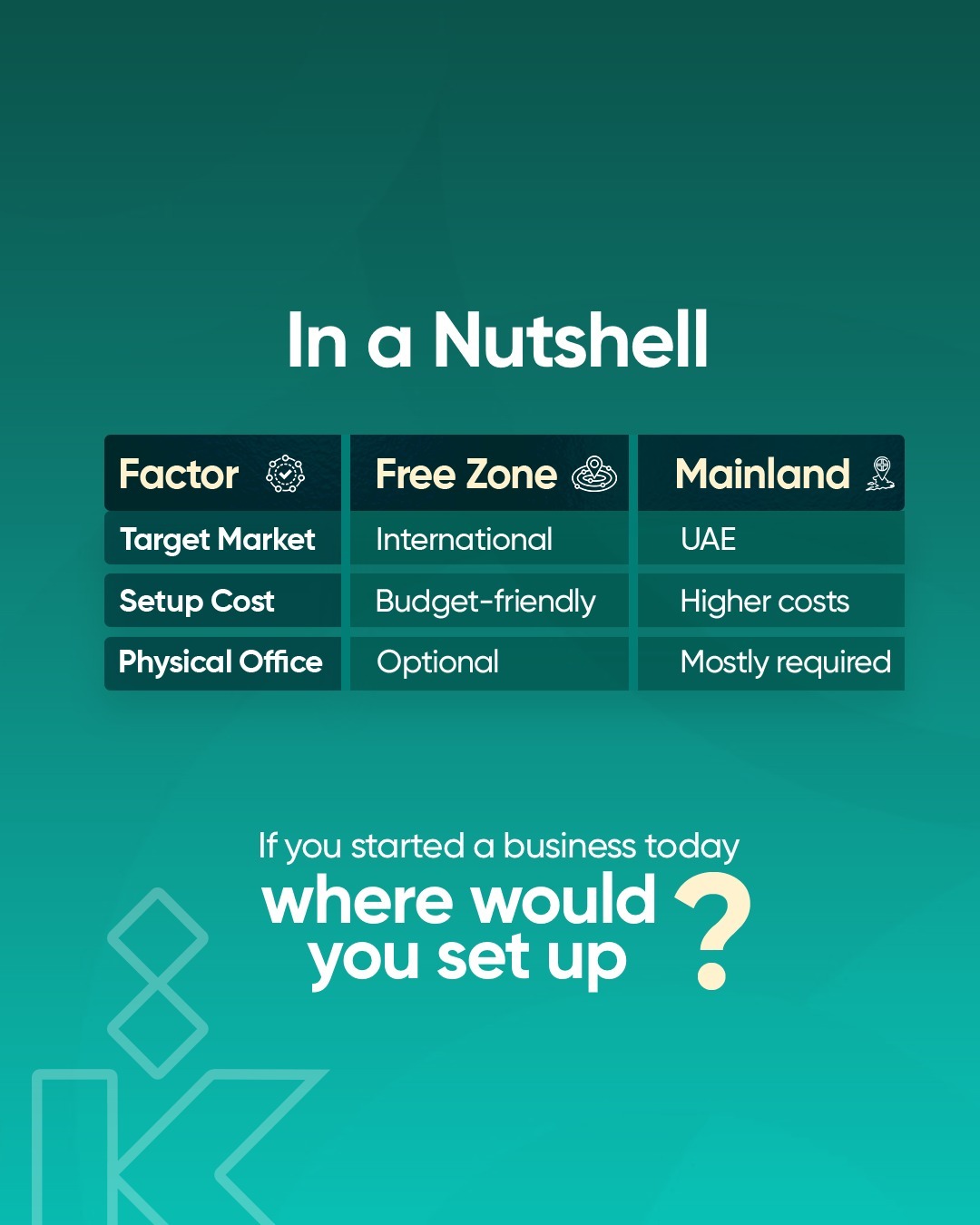
Your first major decision is choosing between a mainland license (issued by the Department of Economic Development in each emirate) and a free zone license (issued by designated economic zones).
Mainland Company Setup
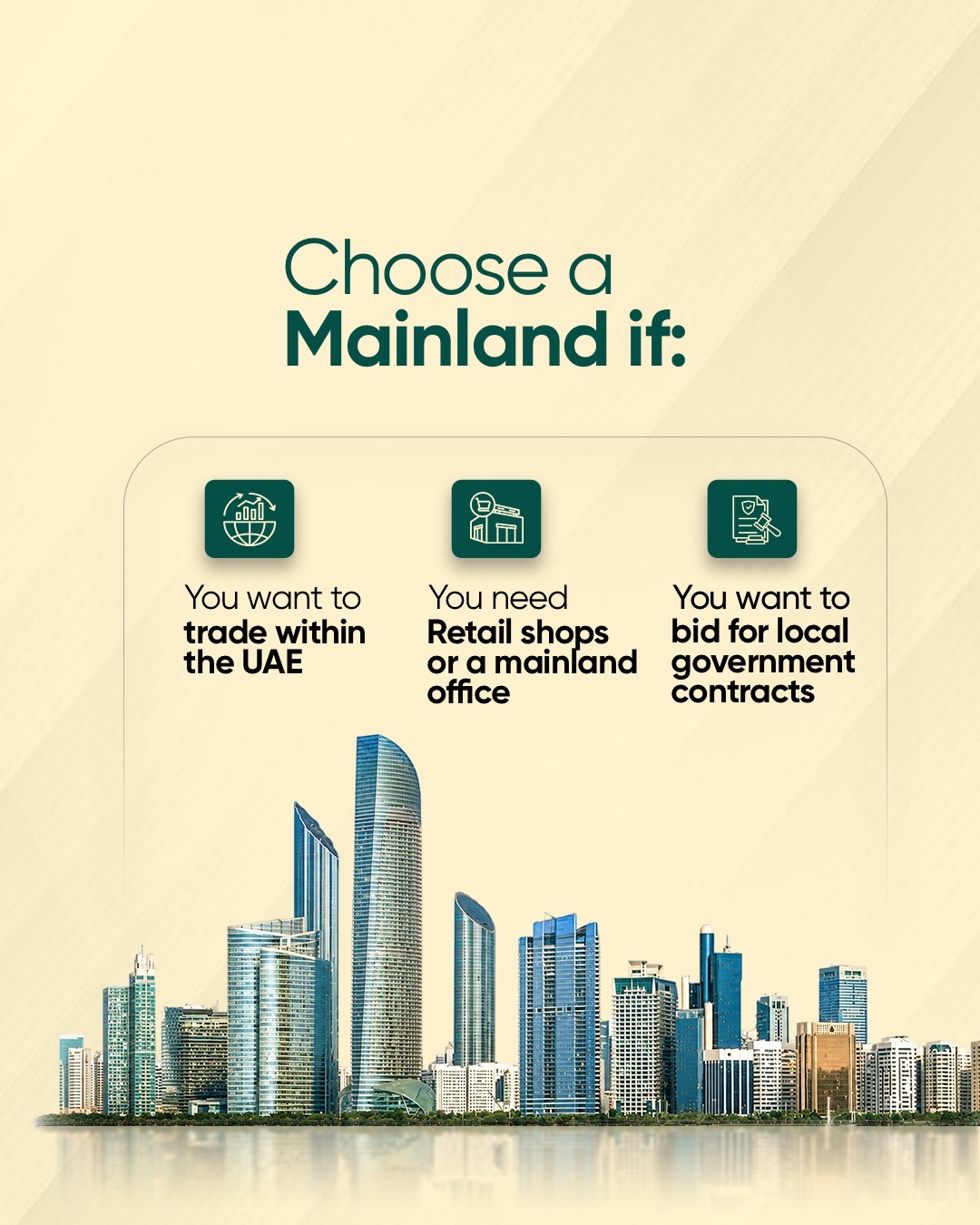
- Allows you to trade directly with the UAE local market and government entities
- Requires a local service agent (for certain activities) or 100% ownership under new foreign ownership laws
- Office space is typically mandatory (flexi-desk options are limited)
- Ideal for businesses targeting local consumers, retail, F&B, or government contracts
Free Zone Company Setup
- Offers 100% foreign ownership by default
- Provides tax exemptions and simplified compliance
- Restricts direct trading with the UAE mainland (requires a local distributor or mainland branch for that)
- Best for consulting, digital services, e-commerce, media, tech, and export-oriented businesses
Most expat entrepreneurs begin with a free zone setup due to lower costs, faster onboarding, and full ownership — then expand to mainland later if needed.
Step-by-Step UAE Company Setup Process for Expats
Follow this proven roadmap to register your business efficiently and compliantly.
Step 1: Define Your Business Activity
Your chosen activity determines your license type, eligible free zones, and visa quota. Common categories include:
- Commercial (trading, e-commerce, retail)
- Professional (consulting, marketing, design, IT services)
- Industrial (manufacturing, assembly, packaging)
- Tourism (travel agencies, event management)
- Freelance/Permit (individual professionals in media, tech, education)
Be specific — “General Trading” is broader and costlier than “E-commerce Activities” or “Marketing Consultancy.”
Step 2: Choose the Right Free Zone or Mainland Jurisdiction
With over 40 free zones across the UAE, selection depends on your budget, activity, and location preference.
Top Free Zone Regions for Expats in 2026:
- Dubai Free Zones: Best for branding, banking ease, and global perception (e.g., Meydan, Dubai Knowledge Park, Dubai Media City, IFZA)
- Sharjah Free Zones: Cost-effective with strong support for SMEs (e.g., SHAMS, SPC)
- Northern Emirates Free Zones: Most affordable options (e.g., Ajman Free Zone, UAQ FTZ, RAKEZ in Ras Al Khaimah)
Indicative 2026 Setup Costs (License + 1 Visa Package):
| Emirate/Region | Starting Cost (AED) | Best For |
| Ajman | 8,000 – 12,000+ | Startups, freelancers, trading |
| Sharjah | 9,000 – 14,000+ | Media, services, consulting |
| Ras Al Khaimah | 10,000 – 15,000+ | Manufacturing, e-commerce |
| Dubai (budget FZ) | 12,000 – 18,000+ | Tech, consulting, general trading |
| Dubai (premium FZ) | 18,000 – 30,000+ | Branding, banking, scalability |
Note: Costs vary by activity, office type (flexi-desk vs physical), and visa count.
Step 3: Select Your License Type
Based on your activity, choose from:
- Commercial License: For trading and retail
- Professional License: For services and consultancy
- Industrial License: For manufacturing
- Freelance Permit: For individual professionals (often linked to free zones like Dubai Media City or SHAMS)
Some free zones offer dual licenses allowing limited mainland trading — useful for hybrid models.
Step 4: Reserve Your Trade Name
Your company name must:
- Reflect your business activity
- Not contain offensive or religious terms
- Comply with UAE naming conventions (no abbreviations unless approved)
Most free zones allow online name reservation within 24 hours.
Step 5: Submit Documents and Apply for Initial Approval
Required documents typically include:
- Passport copies of shareholders (valid 6+ months)
- UAE entry stamp or visa copy (if residing in UAE)
- CV or business plan (for certain activities)
- NOC from current employer (if on UAE employment visa)
Initial approval is usually granted within 1–3 working days.
Step 6: Sign Lease Agreement and Pay Fees
- Flexi-desk or virtual office: Included in most budget packages
- Physical office: Required for some activities and mainland setups
Pay your license, registration, and visa fees. Many free zones offer 0% installment plans over 3–6 months.
Step 7: Receive Your Business License
Once approved, you’ll receive:
- Trade License (digital and/or physical)
- Establishment Card (for visa processing)
- Lease Agreement (if applicable)
Step 8: Apply for UAE Residence Visas
As an investor, you can sponsor:
- Yourself (investor visa)
- Employees (based on quota)
- Dependents (spouse, children)
Typical Visa Process:
- Entry permit application
- Medical fitness test (at approved centres like Al Taj Medical Examination Centre in Sharjah)
- Emirates ID biometrics
- Visa stamping or e-visa issuance
Total timeline: 7–14 working days after license issuance.
Step 9: Open a Corporate Bank Account
UAE banks require:
- Trade license
- Shareholder passports
- Proof of address (home country or UAE)
- Business plan or invoices (for some banks)
Digital banks and fintech solutions now offer faster onboarding for free zone companies.
Step 10: Stay Compliant — Renewals and Reporting
- License renewal: Annually (some zones offer multi-year options)
- Visa renewals: Every 2–3 years
- VAT registration: Mandatory if taxable supplies exceed AED 375,000/year
- Economic Substance Regulations (ESR): Applicable for certain activities
- Corporate Tax: 9% on taxable income above AED 375,000 (free zones may qualify for 0% on qualifying income)
Hidden Costs to Watch Out For
Avoid budget surprises by factoring in:
- Visa fees: AED 3,000–5,000 per person (including medical, Emirates ID, typing)
- Office upgrades: Moving from flexi-desk to physical space
- PRO services: For government liaison (AED 3,000–8,000/year)
- VAT and corporate tax compliance: Accounting and filing fees
- Bank account maintenance: Some banks charge monthly fees
A realistic first-year budget for a single-visa free zone setup: AED 12,000–20,000, depending on emirate and activity.
Special Considerations for Freelancers and Solopreneurs
If you’re a solo operator, consider:
- Freelance permits (available in Dubai Media City, SHAMS, SPC and other zones)
- Low-cost free zone packages with 1 visa and flexi-desk
- Remote work visas (if employed overseas but residing in UAE)
These options reduce overhead while keeping you fully compliant.
How Long Does UAE Company Setup Take for Expats?
- Free zone: 3–7 working days (license), +7–14 days for visas
- Mainland: 7–14 working days (license), +7–14 days for visas
Total end-to-end timeline: 2–4 weeks for most expat entrepreneurs.
Conclusion
UAE company setup for expats in 2026 is faster, more affordable, and more flexible than ever. By choosing the right free zone or mainland structure, understanding license types, and planning for visa and compliance costs, you can launch your business with confidence. Whether you’re a freelancer in Sharjah, a tech startup in Dubai, or a trading company in Ras Al Khaimah, the UAE offers a world-class platform for growth. Ready to start? Begin by defining your activity, comparing free zone packages, and preparing your documents — or consult a licensed business setup advisor to fast-track your journey.
FAQ’S
Q1: What is the minimum cost to start a business in UAE as an expat in 2026?
A:
- License-only packages start from AED 5000–6,500+ in budget free zones
- All-inclusive setup with 1 investor visa typically costs AED 12,000–18,000+ in the first year
- Additional costs include medical test, Emirates ID, and bank account setup
- Mainland setups are generally 20–40% more expensive due to office and sponsorship requirements
Q2: Can expats own 100% of their company in the UAE?
A:
- Yes — 100% foreign ownership is allowed in most free zones by default
- Many mainland activities also permit 100% ownership under updated commercial company laws
- Some regulated sectors (e.g., oil & gas, utilities) may still require local partnership
- Always confirm activity-specific rules with your chosen free zone or DED
Q3: Do I need a physical office to set up a company in UAE?
A:
- No — most free zones offer flexi-desk or virtual office options included in entry packages
- Physical office space is mandatory for certain mainland licenses and regulated activities
- Flexi-desk packages are sufficient for consulting, digital services, and freelance work
- Upgrade to physical space later if your business model requires client-facing premises
Q4: How many visas can I get with a UAE free zone license?
A:
- Standard entry packages typically come with one investor visa, and this can be upgraded to accommodate up to 50 visa quotas.
- Additional employee visas can be added based on office size and free zone quota rules
- Typical quotas: 1–3 visas for flexi-desk, 6+ for physical offices
- Each visa requires medical testing, Emirates ID, and renewal every 2–3 years
Q6: Can I open a UAE bank account with a free zone license?
A:
- Yes — most UAE banks accept free zone licenses for corporate account opening
- Requirements include trade license, shareholder passports, proof of address, and business plan
- Digital banks and fintech platforms offer faster onboarding for small businesses
- Some traditional banks may require minimum deposit or turnover proof
Q7: What is the difference between a freelance permit and a free zone license?
A:
- Freelance permits are for individuals offering services (e.g., design, writing, coaching)
- Free zone licenses are for companies (even single-shareholder) and allow hiring employees
- Freelance permits are cheaper but limit scalability and visa quotas
- Free zone licenses offer more credibility, banking options, and growth potential
Q8: How long does it take to get a UAE business visa after company setup?
A:
- Investor visa processing takes 7–14 working days after license issuance
- Steps include entry permit, medical fitness test, Emirates ID biometrics, and visa stamping
- Medical tests can be completed in 1 day at approved centres like Al Taj Medical Examination Centre in Sharjah
- Total timeline from application to visa in hand: 2–4 weeks for most expats.